Hi, to confirm your appointment you will be redirected to the dedicated booking form.


AI Thinking: What It Means and How Artificial Intelligence Reasons

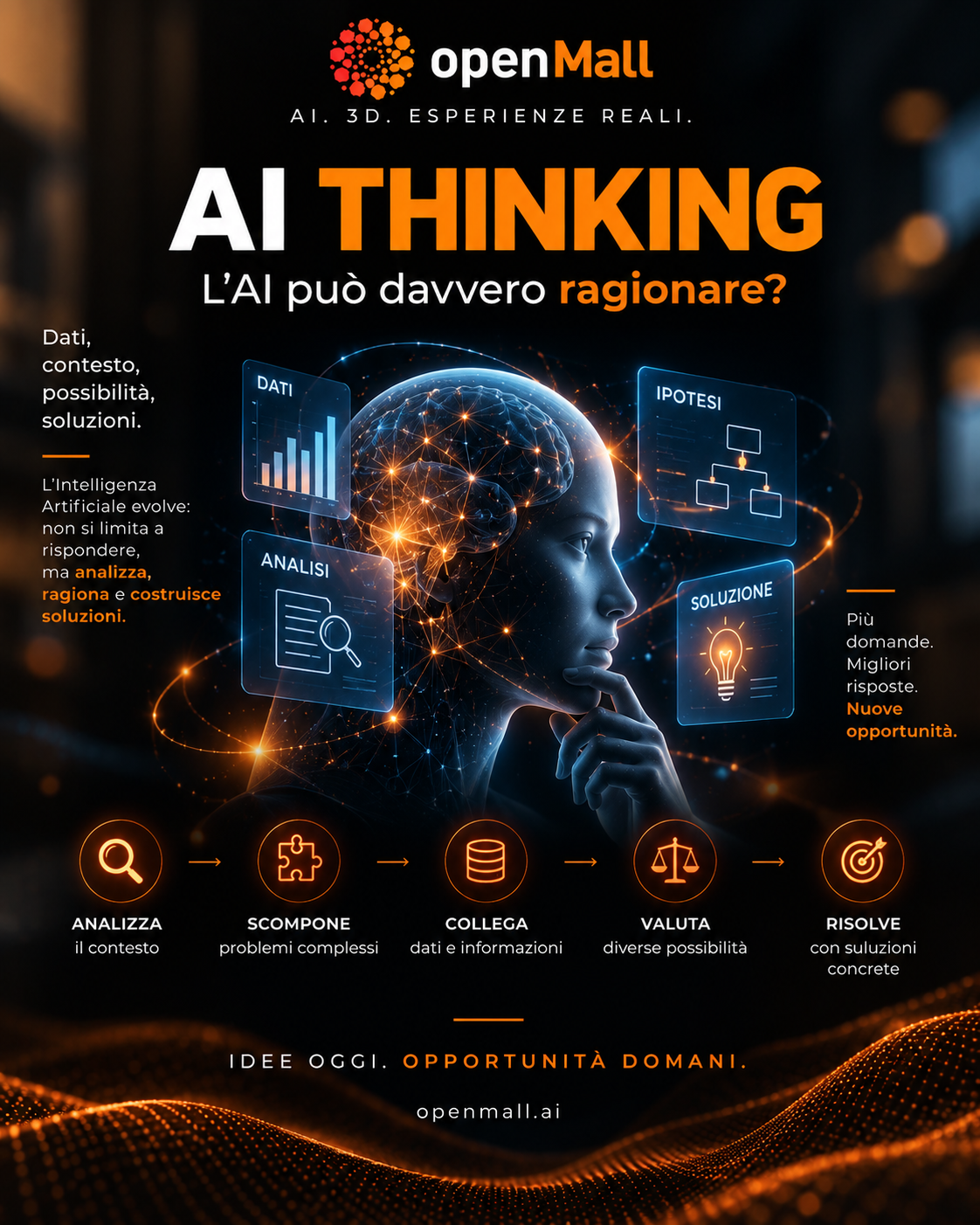
In the rapidly evolving landscape of technology, the concept of AI Thinking has emerged as a pivotal innovation, reshaping how businesses and IT professionals understand and deploy Artificial Intelligence (AI). Unlike traditional computational methods, AI Thinking refers to the advanced capabilities of AI systems to not only process vast amounts of data but to analyze, reason, and make decisions in a structured manner that mimics cognitive processes. This does not imply that AI possesses consciousness or human-like reasoning; rather, it utilizes sophisticated computational reasoning to tackle complex problems.
AI Thinking is rooted in the development of generative AI and AI models that can decompose problems, evaluate different scenarios, and synthesize information in ways that are transformative for businesses. These AI systems are designed to enhance decision-making processes, automate complex operations, and provide innovative solutions to longstanding challenges. The term ‘AI Thinking’ encapsulates this shift from mere data processing to a more nuanced, analytical approach that can lead to more informed and strategic decisions.
The relevance of AI Thinking in today’s business environment cannot be overstated. With the increasing availability of data and the need for scalable solutions, AI’s ability to process and reason through data efficiently is crucial. It opens up new avenues for innovation and efficiency, particularly in sectors where decision-making is based on large datasets and requires high accuracy and speed. Moreover, the integration of AI Thinking into business operations can significantly enhance competitive advantage by optimizing operations and predicting future trends more accurately.
As we delve deeper into the capabilities and implications of AI Thinking, several key areas emerge:
- Understanding AI Thinking: Beyond Simple Computation
- How AI Models Process Information and Solve Problems
- The Distinction Between AI Thinking and Human Cognition
- Practical Applications of AI Thinking in Business
- Future Prospects and Ethical Considerations of AI Thinking
Each of these areas reflects critical aspects of AI Thinking and its potential to transform industries and professional practices. By exploring these topics, we can gain a clearer understanding of how AI is not just automating tasks but is also becoming an integral part of strategic decision-making processes in businesses.
Understanding AI Thinking: Beyond Simple Computation
AI Thinking refers to the advanced capabilities of artificial intelligence systems to process information, analyze complex scenarios, and make decisions. Unlike humans, AI does not possess consciousness or emotional reasoning; instead, it operates through sophisticated computational algorithms that mimic certain aspects of human cognitive processes.
How AI Analyzes and Solves Problems
AI systems begin by analyzing the context of a problem. This involves gathering relevant data and identifying key variables. AI models, particularly those based on machine learning, use historical data to understand patterns and predict outcomes.
- Data collection: AI gathers information from various sources to form a comprehensive dataset.
- Problem decomposition: AI breaks down complex problems into manageable parts.
- Connection of information: AI uses algorithms to find relationships between different data points.
- Evaluation of alternatives: Through simulation and prediction models, AI assesses various scenarios to determine the best course of action.
Comparative Reasoning in AI
One of the key aspects of AI Thinking is its ability to compare different solutions. By simulating various outcomes based on historical data and current variables, AI can forecast the implications of different decisions. This process is crucial in fields such as financial forecasting, strategic planning, and operational adjustments.
Practical Applications in Business
AI Thinking finds practical application in numerous business contexts:
- Data Analysis: AI can process large volumes of data to extract actionable insights, helping businesses to understand market trends and customer preferences.
- Automation: Routine tasks can be automated using AI, freeing up human resources for more complex and creative tasks.
- Decision Support: AI can assist in making informed decisions by providing comprehensive analyses and predicting outcomes of various strategies.
- AI Agents: These are specialized AI systems designed to act autonomously in specific environments, enhancing efficiency and effectiveness.
By leveraging AI Thinking, companies can enhance their operational efficiency, innovate faster, and make more informed decisions, ultimately gaining a competitive edge in their respective industries.
How AI Models Process Information and Solve Problems
Understanding the concept of AI Thinking is crucial in recognizing how Artificial Intelligence (AI) transcends basic task execution to engage in complex problem-solving and decision-making processes. This section explores the structured methods AI systems use to analyze data, break down problems, and devise solutions.
Contextual Analysis and Problem Decomposition
AI models begin by analyzing the context of a problem. This involves ingesting and processing large volumes of data from various sources. Using advanced algorithms, the AI identifies relevant patterns and relationships within the data, which forms the basis for problem understanding.
Following the initial analysis, AI systems decompose complex problems into manageable components. This step is akin to how a software engineer breaks down a large project into smaller, more manageable tasks. By decomposing a problem, AI can address each component individually, applying specific algorithms suited to each part.
Comparative Analysis and Solution Construction
Once the problem is broken down, AI models employ techniques such as machine learning and neural networks to explore various solutions. This stage involves simulating different scenarios to predict outcomes and evaluate the effectiveness of each solution.
The comparative analysis allows AI to weigh alternatives against each other, considering potential impacts and the likelihood of success. This process is crucial in decision-making, where multiple variables and possible outcomes must be assessed.
Finally, AI constructs a structured response based on the analyzed data and selected strategy. This response is then executed, which could range from automating a process, providing decision support, or generating insights for business strategy.
Practical Applications in Business
In the business context, these AI capabilities are transformative. Companies leverage AI to enhance data analysis, automate complex processes, support decision-making, and deploy AI agents that act autonomously within predefined parameters. These applications not only increase efficiency but also open new avenues for innovation and strategic advantage.
The Distinction Between AI Thinking and Human Cognition
AI Thinking refers to the advanced computational processes used by Artificial Intelligence (AI) to analyze, decompose, and solve complex problems. Unlike human cognition, which involves consciousness and emotional reasoning, AI Thinking is rooted purely in logical and structured data processing. This distinction is crucial for understanding the capabilities and limitations of AI in various applications.
How AI Analyzes and Solves Problems
AI systems approach problem-solving by first analyzing the context of the issue at hand. They use large datasets to identify patterns and relevant factors. Next, these systems break down the problem into manageable parts, a process known as decomposition. Each segment is then processed using algorithms designed to evaluate and compare different possibilities.
For instance, in decision support systems, AI might weigh the potential outcomes based on historical data and predefined criteria. This methodical approach allows AI to construct structured responses and suggest solutions that are optimized based on the data available.
Practical Applications in Business
In the business context, AI Thinking can be leveraged for a variety of applications. These include:
- Data analysis: AI can process vast amounts of data to extract actionable insights, identifying trends that might not be visible to human analysts.
- Automation: Routine tasks can be automated using AI, freeing up human workers for more complex and creative tasks.
- Decision support: AI can assist in making informed decisions by simulating various scenarios and predicting their outcomes.
- AI Agents: These are AI systems designed to act autonomously in certain environments, improving efficiency and effectiveness in operations.
Each of these applications demonstrates the power of AI Thinking in enhancing business operations and decision-making processes. By understanding the distinct nature of AI’s reasoning, professionals can better integrate these technologies into their strategic plans.
Practical Applications of AI Thinking in Business
AI Thinking, characterized by advanced computational reasoning, offers significant opportunities for business innovation and efficiency. By understanding how AI models analyze, decompose, and solve complex problems, companies can leverage these capabilities to enhance various operational aspects.
Data Analysis and Insights
One of the primary applications of AI Thinking in business is in the realm of data analysis. AI systems can process vast amounts of data, identifying patterns and anomalies that might not be evident to human analysts. This capability allows businesses to gain deeper insights into customer behavior, market trends, and operational efficiencies. For example, AI can predict customer churn by analyzing interaction data and purchase histories, enabling proactive retention strategies.
Automation of Complex Processes
AI Thinking also plays a crucial role in automating complex business processes. By breaking down tasks into manageable components, AI can oversee processes that involve decision-making based on multiple variables. This is particularly useful in areas such as supply chain management, where AI can optimize logistics based on real-time data regarding inventory levels, delivery times, and demand forecasts.
Enhanced Decision Support
Decision support systems powered by AI Thinking can assist managers in making more informed decisions. By simulating different scenarios and outcomes based on historical data, AI models can recommend the most effective strategies. This application is invaluable in strategic planning and risk management, where the cost of errors can be high.
Deployment of AI Agents
AI Agents, which are applications of AI designed to act autonomously in specific environments, benefit significantly from AI Thinking. These agents can manage customer service interactions, personalize marketing efforts, and even handle certain aspects of human resources, such as onboarding processes. By analyzing and adapting to new data, these AI Agents can continuously improve their performance without human intervention.
In summary, AI Thinking equips businesses with the tools to tackle complex challenges more efficiently and with greater accuracy. As AI technology continues to evolve, its integration into business processes is becoming increasingly indispensable for maintaining competitive advantage.
Future Prospects and Ethical Considerations of AI Thinking
The integration of AI Thinking into business and societal frameworks presents both promising opportunities and significant ethical challenges. As AI systems become more adept at mimicking advanced reasoning processes, the implications for innovation and efficiency are vast. However, the deployment of such technologies must be managed with a keen awareness of the ethical dimensions involved.
Expanding Horizons with AI Thinking
AI Thinking can revolutionize sectors by enhancing decision-making processes and optimizing operations. In industries like healthcare, finance, and logistics, AI models can analyze vast datasets to identify patterns and predict outcomes, leading to more informed and timely decisions. For instance, AI can forecast market trends in finance or diagnose diseases with high accuracy in healthcare.
Addressing Ethical Concerns
Despite the benefits, the rise of AI Thinking raises ethical questions related to privacy, security, and the potential for bias. Ensuring that AI systems are designed with fairness in mind is crucial. Developers must implement robust measures to prevent AI from perpetuating existing biases or creating new ones. Additionally, safeguarding the privacy and security of data used by AI systems is paramount to maintain trust and compliance with global data protection regulations.
Moreover, the autonomy of AI Thinking models suggests a need for clear guidelines on accountability. Establishing who is responsible when an AI makes a decision that leads to negative outcomes is essential for ethical governance and public acceptance of AI technologies.
